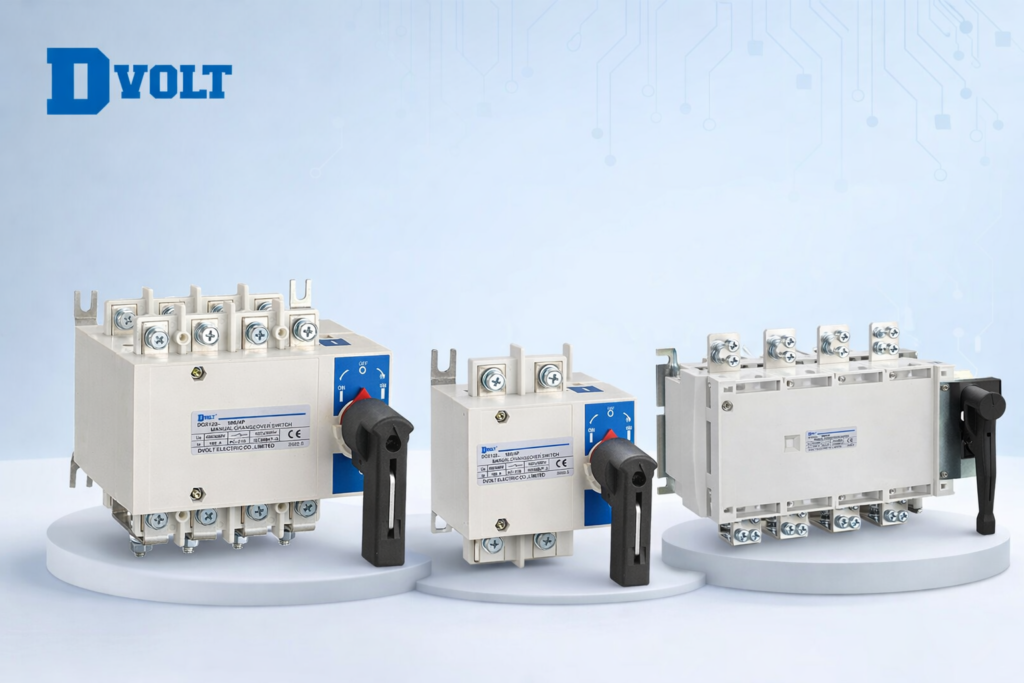
A Complete Guide to Manual & Automatic Changeover Switches for Reliable Power Continuity
Power outages are no longer a rare inconvenience — they are a global operational risk. From residential buildings and commercial facilities to factories, hospitals, and data centers, uninterrupted power is critical.
A changeover switch (also known as a transfer switch) ensures seamless switching between your primary utility supply and a secondary power source, such as a generator or solar-battery system.
This guide explains what a changeover switch is, how it works, the different types available, wiring principles, and how to choose the right solution for modern electrical systems worldwide.
What Is a Changeover Switch?
A changeover switch is an electrical switching device that safely transfers an electrical load between two independent power sources.
Most commonly, it switches power between:
- Utility grid ↔ Generator
- Utility grid ↔ Solar inverter
- Generator ↔ Generator
- Dual utility feeds
The core purpose is power continuity without back-feeding, ensuring:
- Equipment protection
- Personnel safety
- Compliance with electrical regulations
Without a changeover switch, feeding power from a generator can send electricity back into the grid — a dangerous condition for utility workers and electrical infrastructure.
What Is a Changeover Switch Used For?
Changeover switches are used anywhere power reliability, safety, and operational continuity are required.
Common Use Cases
- Preventing downtime during grid outages
- Isolating power sources safely
- Managing multiple power inputs
- Protecting sensitive electrical equipment
Typical Installations
Residential
- Homes
- Residential complexes
- Apartments
Commercial
- Office buildings
- Shopping malls
- Warehouses
Industrial
- Manufacturing plants
- Data centers
- Telecom towers
Critical Infrastructure
- Hospitals
- Healthcare facilities
- Educational institutions
How Does a Changeover Switch Work?
At its core, a changeover switch physically isolates one power source before connecting another — a concept known as break-before-make switching.
Operating Sequence
- Normal Operation: Load is supplied by the primary utility source.
- Power Failure Detected: Voltage drops or fails completely.
- Source Change Initiated:
- Manual switch: operated by hand
- Automatic switch: triggered electronically
- Alternative Source Activated: Generator or backup source supplies power.
- Restoration of Utility Supply: System switches back safely and isolates the backup source.
This ensures no overlap between sources, preventing electrical faults or equipment damage.
Single-Phase vs Three-Phase Changeover Switches
| Type | Used For | Handles |
|---|---|---|
| Single-Phase |
|
|
| Three-Phase |
|
|
Three-phase systems require precise synchronization and load balancing, making correct switch selection critical.
Manual vs Automatic Changeover Switches
Manual Changeover Switch
Key Characteristics
- Operated using a lever or rotary handle
- Cost-effective and reliable
- Simple installation and maintenance
Best For
- Homes
- Small businesses
- Non-critical loads
Advantages
- Low upfront cost
- Minimal electronics
- High durability
Automatic Changeover Switch (ATS)
Key Characteristics
- Monitors voltage and frequency
- Starts generator automatically
- Transfers load without human intervention
Best For
- Hospitals
- Data centers
- Manufacturing plants
- Critical infrastructure
Advantages
- Zero response delay
- Enhanced safety
- Programmable logic and timers
Key Applications Across Industries
| Industry | Why Changeover Switches Matter |
|---|---|
| Healthcare | Life-support equipment requires zero downtime |
| Manufacturing | Prevents production losses |
| Data Centers | Protects servers and network uptime |
| Commercial Buildings | Ensures business continuity |
| Telecom | Maintains communication networks |
| Residential | Comfort, safety, and appliance protection |
How to Wire a Changeover Switch (Overview)
Typical Wiring Structure
- Utility input terminals → Main grid
- Backup input terminals → Generator or inverter
- Load terminals → Distribution board
- Ground terminal → Earthing system
Key Wiring Principles
- Never parallel utility and generator inputs
- Maintain proper grounding
- Ensure correct phase sequence (3-phase systems)
- Follow torque and cable sizing specifications
Safety Standards & Compliance Considerations
A quality changeover switch should comply with:
- IEC standards (global installations)
- UL / CSA (North America)
- IS / CE / ISO certifications (region-specific)
Additional Safety Features to Look For
- Mechanical interlocking
- Short-circuit withstand rating
- Clear ON/OFF/TRANSFER indicators
- Fire-retardant enclosures
How to Choose the Right Changeover Switch
Consider the following before selection:
Electrical Factors
- Rated current (A)
- Voltage level
- Short-circuit capacity
- Phase configuration
Operational Factors
- Manual vs automatic operation
- Switching speed requirements
- Critical vs non-critical loads
Environmental Factors
- Indoor vs outdoor installation
- Temperature range
- Dust and moisture protection (IP rating)
Frequently Asked Questions (FAQs)
Q1. Is a changeover switch mandatory for generators?
In most regions, yes — it is required to prevent back-feeding and ensure safety.
Q2. Can one changeover switch handle solar and generator input?
Yes, if designed for multi-source configurations.
Q3. What happens if a changeover switch fails?
High-quality switches default to isolation, preventing unsafe connections.
Conclusion
A changeover switch is a critical component in modern electrical systems, ensuring safety, reliability, and uninterrupted power during outages.
Whether you are protecting a home, running a factory, or maintaining mission-critical infrastructure, selecting the right changeover switch ensures:
- Operational continuity
- Electrical safety
- Long-term system reliability
Explore Our Changeover Switch Solutions
At Dvolt Electric, we focus on robust, standards-compliant power switching solutions designed for global applications and demanding environments.