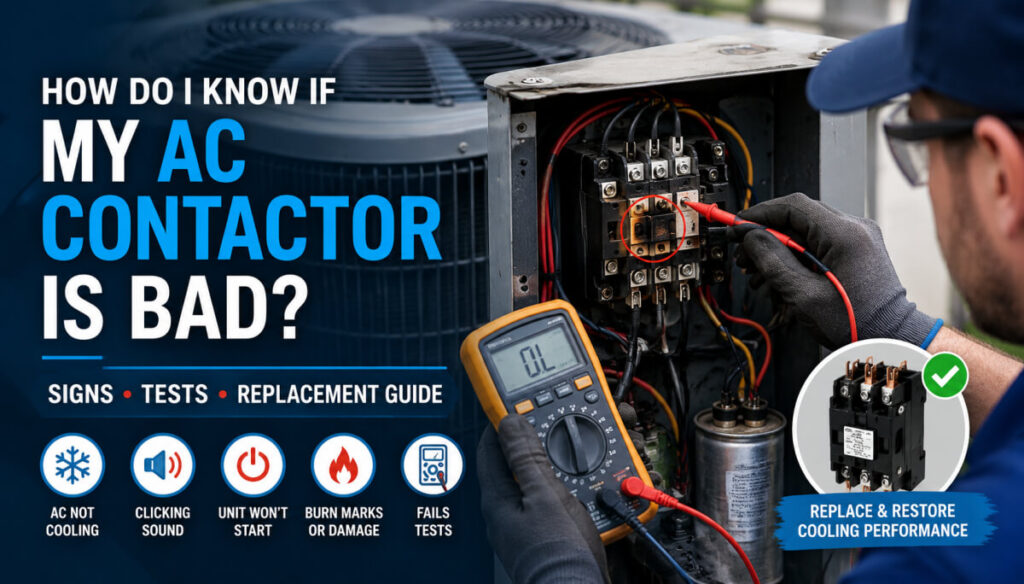
Complete Guide to Diagnosing a Failing AC Contactor, Testing It Safely, Understanding Replacement Costs, and Keeping Your HVAC System Running
If your air conditioner suddenly won’t turn on, makes a loud clicking or buzzing noise, or keeps running even after the thermostat is satisfied, the problem may not be the compressor at all — it could be a bad AC contactor. The AC contactor is a small but critical electrical part, and when it fails, it can shut down your entire cooling system or cause expensive damage to the compressor.
Many homeowners and HVAC technicians wonder how do I know if my AC contactor is bad without spending money on a service call they may not need. The good news is that most AC contactor failure symptoms are easy to identify, and with a basic multimeter, you can confirm a bad contactor in minutes.
In this guide, we’ll explain exactly how to know if your AC contactor is bad, the most common failure symptoms, how to test an AC contactor safely with a multimeter, what a replacement costs, and when it’s time to call a professional.
What Is an AC Contactor and What Does It Do?
So, what is a contactor in HVAC systems exactly? An AC contactor is an electrically operated switch inside the outdoor condenser unit that connects line voltage power to your compressor and condenser fan motor whenever the thermostat calls for cooling.
How a Magnetic Contactor Works
Most residential units use a magnetic contactor: a low-voltage (typically 24-volt) signal from the thermostat energizes an electromagnetic coil, pulling a set of internal contacts closed. Once closed, those contacts allow full line voltage to flow to the compressor and fan. When the thermostat is satisfied, the coil de-energizes, a spring releases the contacts, and power is cut off.
Where Is the Contactor on AC Unit Equipment Located?
The contactor on AC unit systems is almost always mounted inside the outdoor condenser cabinet next to the run capacitor. This exposed location means the part faces heat, moisture, dirt, and insect damage over time — all of which accelerate wear and contact failure.
AC Contactor Voltage and Pole Configurations
Every air conditioner, heat pump, and many commercial HVAC contactor setups rely on this same basic design — whether it’s a single-pole AC unit contactor on a small residential system or a larger two-pole compressor contactor used on bigger units. Before buying a replacement, always check the AC contactor voltage rating on the old part’s coil. Most residential systems use 24V coils, though some commercial units use 120V or 240V.
Because the contactor cycles on and off thousands of times each season, it is also one of the first electrical parts in any HVAC system to wear out.
Common Signs and Symptoms of a Bad AC Contactor
If you’re asking “how do I know if my AC contactor is bad” — or how to tell if a contactor is bad without opening up the unit — look for these common AC contactor failure symptoms and bad contactor symptoms:
AC Won’t Turn On
If the contacts fail to close, no power reaches the compressor or fan, and the outdoor unit stays completely silent even when the thermostat calls for cooling.
Clicking, Chattering, or Buzzing
A rapid clicking or buzzing sound from the outdoor unit is one of the most common bad AC contactor symptoms. It usually points to a weak coil, pitted contacts, or a loose 24V control connection.
AC Runs Constantly
If the contacts weld together from arcing, the contactor stays closed after the thermostat signal stops — a classic sign of a bad contactor on an AC unit that can quickly overheat the compressor.
Visible Burn Marks or Pitting
Physical damage on the housing or contact points — melted plastic, discoloration, or pitting — indicates electrical arcing and overheating and is a clear visual sign the part needs replacement.
Contactor Not Pulling In
If pressing the contactor plunger in manually makes the unit run, but it won’t engage on its own, the coil or low-voltage control circuit has likely failed.
High Bills and Short-Cycling
A contactor that can’t hold a solid connection causes the compressor to short-cycle, wasting energy and accelerating wear on other parts throughout the HVAC system.
How to Check an AC Contactor: Step-by-Step Testing Guide
Whether you call it testing an AC contactor, learning how to test contactor on AC unit equipment, or simply checking an AC contactor before calling a technician, safety must come first. AC contactors carry both 24V control voltage and 208–240V line voltage. Always disconnect all power before inspecting or touching any internal components.
Tools You’ll Need
- Multimeter – Measures continuity, resistance, and voltage across coil terminals and contacts
- Voltage Tester – Confirms power is fully disconnected before you touch anything
- Insulated Screwdriver – Removes the access panel and terminal screws safely
- Insulated Gloves and Safety Glasses – Essential protection against electrical shock and arc flash
- Flashlight or Work Light – Improves visibility inside the condenser cabinet
Step 1: Shut Off All Power
Turn off the thermostat, then switch off the breaker supplying the outdoor unit and pull the outdoor disconnect. Use a voltage tester to confirm that no power is flowing before opening the access panel.
Step 2: Remove the Access Panel
Use an insulated screwdriver to remove the access panel screws on the outdoor condenser unit. Locate the contactor — it will be near the bottom of the cabinet, close to the run capacitor and the incoming power wiring.
Step 3: Visually Inspect the Contactor
Look closely at the contactor housing, contact surfaces, and plunger. Significant burn marks, melted plastic, corrosion, pitting, or a stuck plunger usually means it’s time for an AC contactor replacement without any further testing needed.
Step 4: Test the Coil With a Multimeter
Here’s how to check AC contactor coil resistance: set the multimeter to ohms and place the probes on the two low-voltage coil terminals. A healthy 24V coil typically reads between 20–30 ohms. A reading of zero (shorted coil) or infinite resistance (open coil) means the coil has failed and the contactor must be replaced.
Step 5: Check Continuity Across the Contacts
This is the core of how to check an AC contactor for contact wear. With power still off, manually depress the contactor plunger and test continuity across each set of contacts with the multimeter. No continuity when the plunger is depressed indicates burned, pitted, or welded-open contacts.
Step 6: Test for Voltage at the Contactor
With power restored and the thermostat calling for cooling, use a multimeter to confirm 24V is present at the coil terminals. Also verify that line voltage passes through from the line side to the load side when the contactor engages. If 24V is present but the contactor won’t pull in, the coil has failed. If 24V is absent, the problem is in the control circuit, not the contactor itself.
AC Contactors by Brand and Application
AC contactors come in different pole configurations (1-pole, 2-pole, and 3-pole), coil voltages (typically 24V, but also 120V and 240V), and current ratings depending on the size of the compressor they control.
Goodman, Trane, Carrier, and Universal Contactors
You’ll find OEM and aftermarket options for major brands, including Goodman air conditioner contactors, Goodman contactor parts, Trane contactors, Carrier, and Bryant. Most are interchangeable with universal contactors as long as pole count, coil voltage, and amperage rating match your existing unit.
Compressor Contactors for Commercial and Industrial HVAC
The same contactor design is also used as an air conditioner compressor contactor or AC compressor contactor on commercial rooftop units, a contactor for compressor applications in refrigeration equipment, and an air compressor contactor on industrial machinery. Dvolt manufactures AC contactors and magnetic contactors built for the high inrush current and frequent cycling that HVAC compressors demand — with options matching Goodman, Trane, and most universal HVAC contactor specifications.
How Much Does an AC Contactor Replacement Cost?
AC contactor price and replacement costs depend on amperage rating, pole configuration, and brand. Here is a general breakdown of what to expect:
| Item | Typical Cost Range |
|---|---|
| AC Contactor Part Only (Residential, 1–2 Pole) | $10 – $40 |
| Heavy-Duty / Commercial AC Contactor | $30 – $100 |
| Professional Installation / Labor | $80 – $250 |
| Total AC Contactor Replacement Cost | $100 – $400 |
Replacing the contactor yourself is one of the more affordable HVAC repairs if you have electrical experience. However, since it involves line voltage wiring directly connected to the compressor, most homeowners choose to have a licensed technician handle the AC unit contactor replacement.
When Should You Replace Your AC Contactor?
Most AC contactors last 5–10 years, but heavy usage, voltage fluctuations, insect nesting, and dirty environments can shorten that lifespan considerably. Plan for an AC contactor replacement if you notice any of the following:
- Burned or pitted contact surfaces
- A contactor that doesn’t pull in reliably when called
- Contacts that stay welded shut after the thermostat signal stops
- A failed coil resistance reading during multimeter testing
- Melting, cracking, or discoloration around the housing
- Persistent buzzing, humming, or chattering from the outdoor unit
- Frequent short-cycling and unexplained high energy bills
Common Mistakes to Avoid When Diagnosing or Replacing an AC Contactor
- Working on the contactor without confirming power is fully disconnected
- Replacing the contactor without testing the coil voltage first — the problem may be in the 24V control circuit
- Installing the wrong pole count, coil voltage, or amperage rating
- Mixing incompatible contactor brands without checking specifications
- Failing to inspect wiring terminals for corrosion or loose connections during replacement
- Ignoring insect or debris damage inside the condenser cabinet
When to Call a Licensed HVAC Technician
While some HVAC technicians and experienced DIYers are comfortable replacing a contactor, certain situations require professional expertise.
You should contact a licensed technician if:
- The contactor tests fine but the compressor still won’t run — the compressor itself may be failed
- You find burned or melted wiring inside the condenser cabinet
- The unit continues short-cycling after contactor replacement
- You are not comfortable working around 240V line voltage
- The outdoor disconnect or breaker is damaged
- You are unsure about electrical code compliance or local permit requirements
Frequently Asked Questions
How Do I Know If My AC Contactor Is Bad Without a Multimeter?
Look for visible burn marks on the housing or contacts, and listen for buzzing, clicking, or chattering sounds from the outdoor unit. Also check whether the unit runs constantly without cooling or won’t start at all. These are reliable visual and audible signs of a bad AC contactor, though a multimeter test is the most accurate way to confirm it.
Can a Bad AC Contactor Cause the Compressor Not to Run?
Yes. If the coil has failed or the contacts won’t close, no power reaches the compressor, and the outdoor unit will appear completely dead even though the indoor air handler or blower may still operate normally.
What Is the Average Lifespan of an AC Contactor?
Most residential AC contactors last between 5 and 10 years depending on usage frequency, climate, and operating environment. Units that run frequently in hot, humid, or dusty climates will typically see shorter contactor lifespan.
Why Does My New AC Contactor Keep Buzzing?
Buzzing after replacement usually indicates a low or fluctuating 24V control signal, a loose coil connection, incorrect coil voltage rating, or debris on the contact surfaces. Verify the coil voltage matches the thermostat control voltage and that all low-voltage wiring connections are tight.
Need a Replacement AC Contactor?
If your diagnosis points to a bad AC contactor, Dvolt offers magnetic contactors, AC contactors, and compressor contactors built for residential and commercial HVAC systems — designed for reliable performance under heavy cycling conditions.
Contact Our Team Browse AC ContactorsFinal Thoughts
Knowing how do I know if my AC contactor is bad can save you from a sweltering home and a costly compressor repair. Watch for clicking, buzzing, an AC unit that won’t turn on or won’t shut off, and visible burn marks or pitting — and confirm your diagnosis with a simple multimeter test before assuming the worst.
Electrical work inside an outdoor condenser always carries risk. If you encounter damaged wiring, persistent problems after replacement, or are unsure at any point in the process, contact a licensed HVAC technician immediately.
A properly functioning AC contactor is one of the simplest and most affordable parts in your entire HVAC system — but it’s also one of the most important. Regular seasonal inspection can catch early wear before it becomes a full system failure.