A Step-by-Step Guide to Installing, Replacing, and Safely Removing a Square D Breaker in Your Panel
Learning how to install a Square D circuit breaker is one of the most searched-for home electrical tasks, and for good reason — Square D panels are among the most common residential setups, and a breaker replacement is one of the few panel jobs a careful homeowner can handle without a full rewire.
Whether you’re installing a square d breaker to add a new circuit, replacing one that’s failed, or simply confirming what is a square d circuit breaker before you buy a replacement, the process follows the same basic steps: cut power, confirm compatibility, seat the breaker correctly, and land the wire securely.
This guide covers square d circuit breaker installation from start to finish, how to remove a square d breaker safely, common wiring mistakes, and when a job that started as a simple swap should be handed to a licensed electrician instead. For the outlet-wiring side of a panel upgrade, see our guide on installing a new circuit breaker and outlet safely.
What Is a Square D Circuit Breaker?
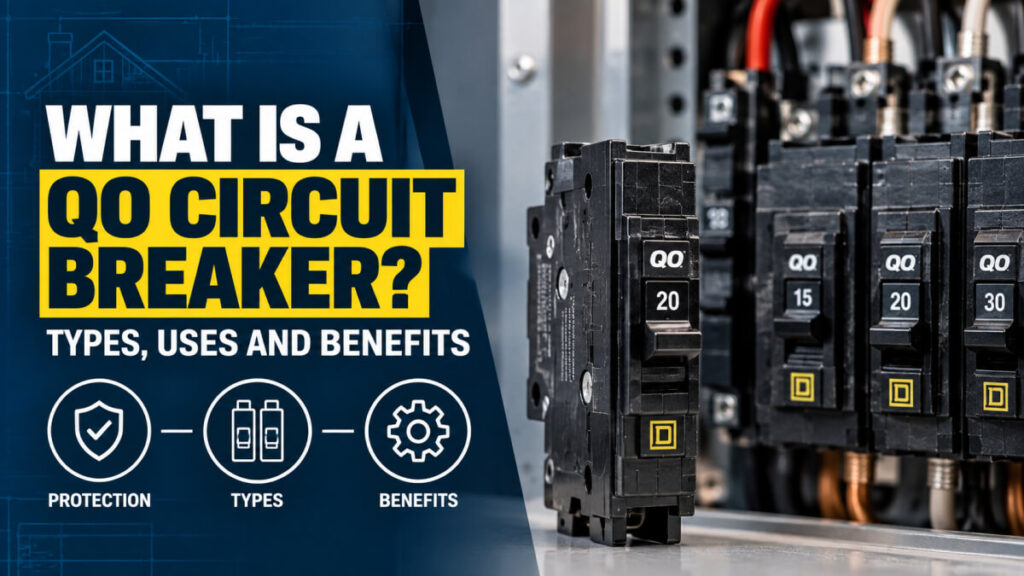
A Square D circuit breaker is a panel-mounted overcurrent protection device manufactured by Schneider Electric under the Square D brand, designed to snap directly onto the busbar of a matching Square D panel. Functionally, it plays the same role as any MCB (miniature circuit breaker) — once installed, it protects the wiring on its circuit by tripping if current exceeds a safe level.
Square D Breaker Types: QO, Homeline, and QOB
Square D offers several breaker families, and mixing them up is the fastest way to install the wrong part. QO breakers use a bolt-on style clip and are common in older and mid-range panels. Homeline breakers use a simpler plug-on design and are found in most builder-grade residential panels. The square d qob breaker is a bolt-on variant rated for higher interrupting capacity, typically specified for panels with higher available fault current.
Square D Circuit Breaker Panel Compatibility
Before installing a square d breaker, confirm your panel is actually a square d circuit breaker panel and not a similar-looking competitor brand. Check the panel’s interior label or the printed model number on the busbar — it will specify which breaker series (QO, Homeline, or QOB) is approved for that panel.
Tools and Safety Precautions Before You Start
Tools You’ll Need
- Non-Contact Voltage Tester – Confirms the panel is de-energized before you touch anything
- Insulated Screwdriver Set – Removes the panel cover and terminal screws safely
- Wire Strippers – Prepares conductor ends for a clean connection
- Insulated Gloves and Safety Glasses – Basic protection against shock and arc flash
- Flashlight – Most panels sit in dim basements, closets, or garages
How to Install a Square D Circuit Breaker: Step-by-Step
Step 1: Shut Off the Main Breaker
Switch off the panel’s main breaker to de-energize the busbar, then use a voltage tester to confirm there’s no power present before removing the cover.
Step 2: Remove the Panel Cover
Unscrew and lift away the dead-front cover to expose the busbar and existing breakers. Keep the cover’s screws organized — you’ll need them again.
Step 3: Confirm the Correct Slot and Breaker Type
Identify an open slot rated for your new circuit’s amperage — see our guide on how many watts a 20 amp circuit breaker can handle if you’re unsure what load the circuit needs to support — and confirm you have the matching QO, Homeline, or QOB breaker for your panel. Installing circuit breaker in panel slots that don’t match the busbar design won’t seat securely, even if it appears to fit.
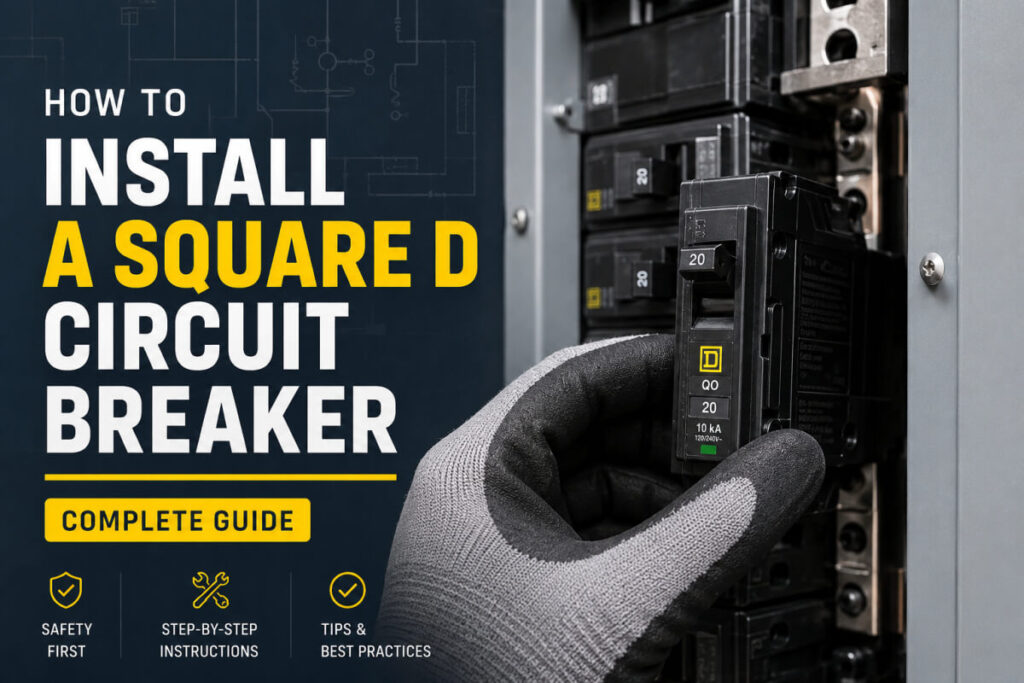
Step 4: Snap the Breaker Onto the Busbar
Hook the back of the breaker onto the busbar’s stab connector at an angle, then rotate it down and press firmly until it clicks into place flush with the other breakers.
Step 5: Land the Circuit Wire
Strip the wire to the length specified on the breaker label, insert it fully into the terminal, and tighten the screw to the torque spec printed on the breaker. Square D breakers are listed for one conductor per terminal — so if you’re wondering can you put 2 wires on a square d breaker, the answer is generally no unless the specific breaker is explicitly listed for dual conductors; doubling up on a standard terminal causes loose connections and overheating.
Step 6: Replace the Cover and Restore Power
Reinstall the dead-front cover, confirm the new breaker’s handle is in the “OFF” position, then restore main power and switch the new breaker on.
How to Remove or Replace a Square D Breaker
Whether you’re troubleshooting a failed breaker or simply upgrading capacity, how to remove a square d breaker follows the install steps in reverse: de-energize the panel, disconnect the circuit wire, then pull the breaker’s face away from the busbar while releasing the mounting clip at the back. If you’re replacing square d breaker units of the same amperage, the process lines up closely with our general guide on how to change a circuit breaker safely — just confirm the replacement is the same series before you begin.
| Square D Series | Mounting Style | Common Use |
|---|---|---|
| QO | Bolt-on / rejection clip | Standard residential and light commercial panels |
| Homeline | Plug-on | Builder-grade residential panels |
| QOB | Bolt-on, higher interrupting rating | Panels with higher available fault current |
Common Mistakes to Avoid
- Installing a breaker series that doesn’t match your specific square d circuit breaker panel
- Skipping the voltage test and assuming the main breaker being off means the busbar is safe to touch
- Landing two conductors on a terminal that isn’t rated for it
- Forcing a breaker into a slot where it doesn’t seat flush with the busbar
- Leaving the panel directory unlabeled after adding or replacing a circuit
When to Call a Licensed Electrician
You should contact a professional if:
- You’re adding a brand-new circuit rather than replacing an existing breaker of the same size
- Your panel shows signs of a damaged busbar, scorch marks, or a loose bus stab
- You’re not confident confirming which Square D series your panel requires
- Local code requires a permit or inspection for panel work in your area
- The new breaker won’t seat flush or trips immediately after installation — see our guide on whether circuit breakers can reset themselves if it keeps flipping back off
Frequently Asked Questions
What Is a Square D Breaker, Exactly?
A Square D breaker is a Schneider Electric-manufactured circuit breaker designed to snap onto the busbar of a matching Square D panel, protecting the circuit’s wiring from overcurrent and short circuits.
Can You Put 2 Wires on a Square D Breaker?
Only if the specific breaker model is listed for two conductors per terminal. Standard single-pole breakers are rated for one wire; doubling up on an unlisted terminal risks a loose connection and overheating.
How Do I Know Which Square D Breaker Series I Need?
Check the label inside your panel door or the printed model number on the busbar itself — it will specify QO, Homeline, or QOB. The breaker series must match; they are not interchangeable between panel types.
Is Installing a Square D Breaker a DIY-Friendly Job?
Replacing a breaker of the same type and amperage is manageable for a careful homeowner comfortable working near a de-energized panel. Adding new circuits or working on a panel with any visible damage is best left to a licensed electrician.
Need Reliable Circuit Breakers for Your Panel?
Dvolt manufactures MCBs, MCCBs, and switch disconnectors built to the same performance standards as leading breaker brands, for residential and commercial electrical panels alike.
Contact Our Team Browse Circuit BreakersFinal Thoughts
Knowing how to install a square d circuit breaker comes down to three things: matching the correct series to your panel, working safely around a de-energized busbar, and landing the wire securely on the terminal. Follow those steps in order and a routine breaker swap stays routine.
If anything about your panel looks damaged, unlabeled, or unfamiliar, or you’re adding capacity rather than swapping a like-for-like breaker, call a licensed electrician before opening the cover.