How to Find, Test, Reset, and Correctly Size the Circuit Breaker That Powers Your Furnace
If your furnace will not turn on with thermostat calls for heat, the problem often isn’t the furnace at all — it’s the furnace circuit breaker feeding it power. A tripped or failing breaker is one of the most common, and most overlooked, reasons a heating system goes dead.
Homeowners searching for how to check furnace circuit breaker issues usually run into one of two problems: the furnace breaker tripped once and needs a reset, or the breaker keeps tripping and something on the circuit is drawing too much current. Both are easy to diagnose once you know the furnace switch location and how to test the circuit safely.
This guide covers the hvac circuit breaker location in your panel, how to reset a furnace breaker switch, what causes a furnace tripping breaker, correct furnace circuit breaker size ratings, and when to stop resetting it and call an electrician.
What Is a Furnace Circuit Breaker, and Where Is It Located?
A furnace circuit breaker is the dedicated overcurrent protection device in your electrical panel that powers the blower motor, control board, ignitor, and low-voltage transformer. Most residential panels use a standard MCB (miniature circuit breaker) for this circuit. Even gas furnaces rely on this circuit, since the blower and ignition system run on standard line voltage.
Furnace Switch Location and Panel Placement
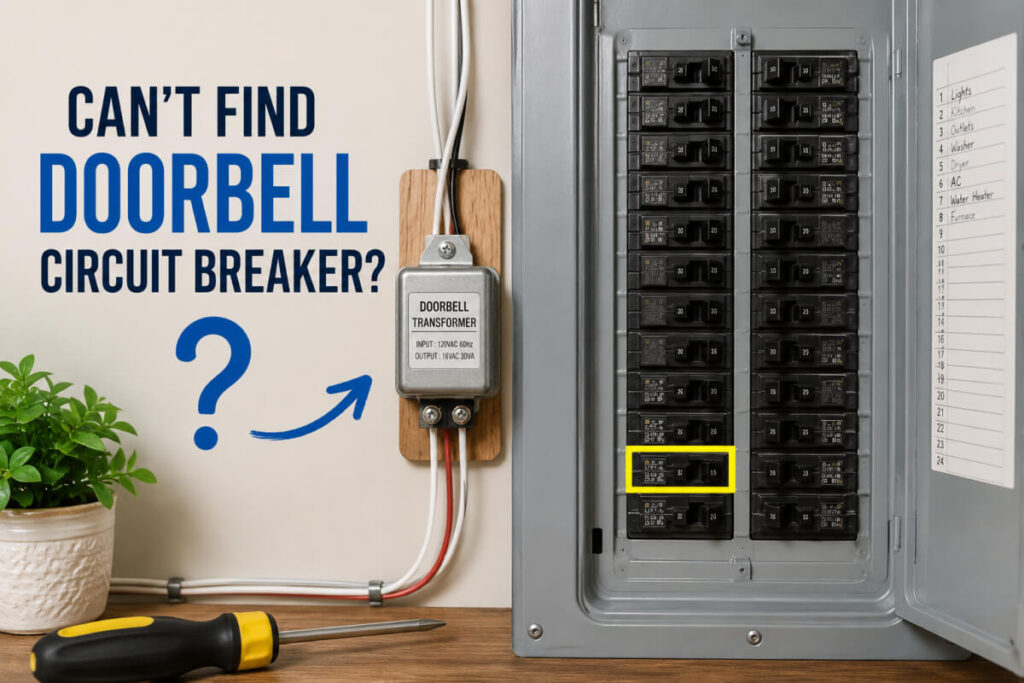
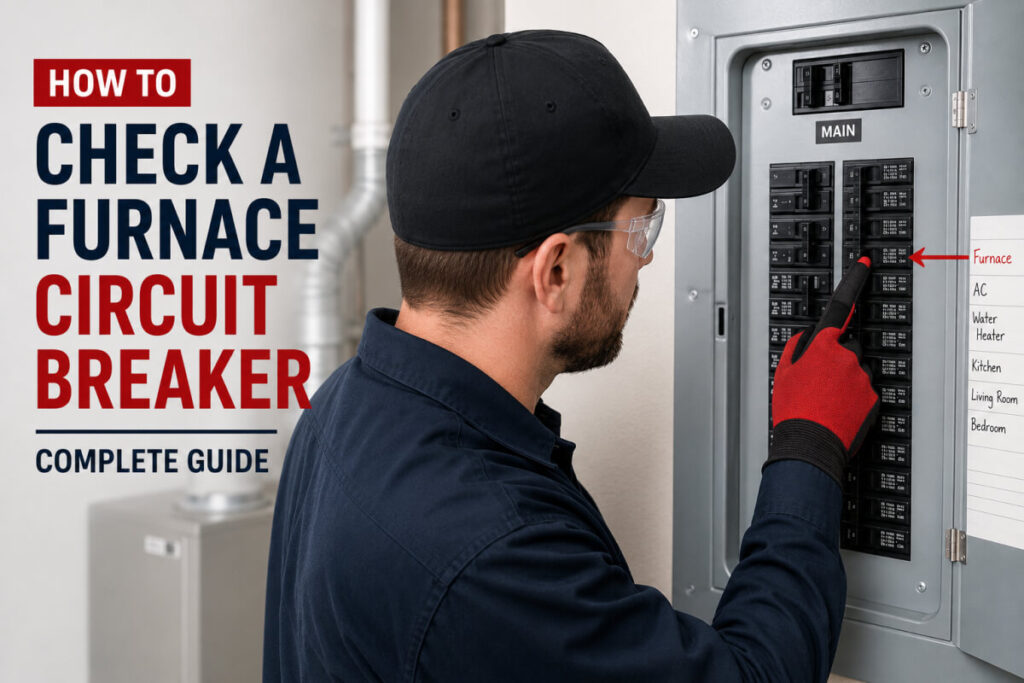
Most furnaces also have a local disconnect — the furnace breaker switch, often a switch disconnector — mounted on or near the unit for quick shutoff during filter changes or repairs. In the main panel, the hvac circuit breaker location is usually labeled “Furnace,” “Heat,” or “Air Handler.” If an electrical panel has furnace labeling that’s worn off, look for a single- or double-pole breaker rated 15–30 amps that’s separate from your lighting and outlet circuits.
Furnace Breaker vs. Circuit Breaker for Thermostat
Don’t confuse the line-voltage furnace breaker with a circuit breaker for thermostat control. The thermostat runs on a 24V circuit powered through the furnace’s internal transformer, not a standalone panel breaker. If thermostat not turning on furnace is your symptom, the cause may be thermostat power loss, a blown control-board fuse, or a tripped main furnace breaker upstream — not a separate “thermostat breaker.”
Signs Your Furnace Breaker Has Tripped or Is Failing
Furnace Won’t Respond to Thermostat
No fan, no click, no ignition sequence at all — a tripped breaker at the panel is the first thing to rule out.
Furnace Keeps Tripping the Breaker
Repeated tripping, sometimes minutes after resetting, usually points to a shorted blower motor, a failing AC contactor, or a weakened breaker.
Thermostat Not Turning On Furnace
A blank or unresponsive thermostat display often means the transformer lost power because the main breaker tripped upstream.
Furnace Breaker Tripped Only at Startup
If it trips specifically when the blower kicks on, motor inrush current is likely exceeding what an aging breaker can handle.
How to Check a Furnace Circuit Breaker: Step-by-Step
Learning how to check furnace circuit breaker status only takes a few minutes, but because you’re working at the main panel, safety comes first.
Tools You’ll Need
- Flashlight – Most panels sit in dim basements or closets
- Non-Contact Voltage Tester – Confirms power before and after resetting
- Multimeter – Checks voltage at the furnace disconnect
- Owner’s Manual – Confirms the correct furnace circuit breaker size
Step 1: Find the Right Breaker
Locate the breaker labeled for the furnace, heat, or air handler, separate from general lighting and outlet circuits.
Step 2: Check the Handle Position
A breaker resting between “ON” and “OFF” has tripped. One fully “ON” that still isn’t feeding the furnace may have failed internally.
Step 3: Reset It Properly
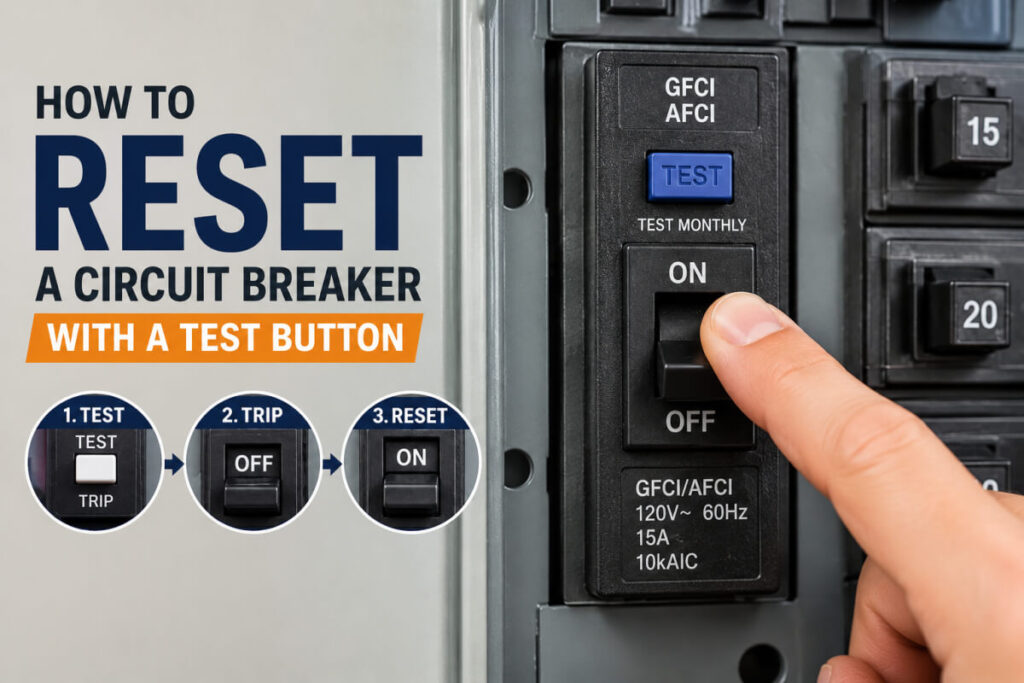
Push the handle firmly to full “OFF,” then back to “ON.” Flipping a tripped breaker straight from the middle to “ON” often fails to reset the trip mechanism — see our guide on whether circuit breakers can reset themselves if yours keeps flipping back off on its own.
Step 4: Check the Local Disconnect
If the panel breaker is on but the furnace is still dead, check the furnace switch location near the unit — it’s easily bumped off during maintenance.
Step 5: Test for Voltage
With the breaker and disconnect both on, use a multimeter at the furnace’s power terminals — the same basic method used to test an AC contactor on the cooling side of your system. No voltage points to a wiring fault or a breaker that failed even in the “ON” position.
Furnace Circuit Breaker Size: What Amperage Do You Need?
Furnace circuit breaker size depends on whether you have a gas furnace with an electric blower or a fully electric furnace with heating elements. Installing the wrong amperage — for either a breaker for heater equipment or a gas furnace circuit — is one of the most common DIY mistakes. If you’re unsure how much load a given breaker can safely carry, our guide on how many watts a 20 amp circuit breaker can handle covers the math behind these ratings. Larger electric furnaces typically require an MCCB (moulded case circuit breaker) rather than a standard MCB.
| Furnace Type | Typical Breaker Size |
|---|---|
| Gas or Oil Furnace (Blower + Controls) | 15 – 20 Amp |
| Small Electric Furnace (10–15 kW) | 40 – 60 Amp |
| Large Electric Furnace (20 kW+) | 80 – 100 Amp |
| Related: Hot Water Heater Circuit Breaker | 30 Amp (typical) |
Always confirm the exact amperage on the furnace’s data plate rather than guessing. An oversized breaker won’t trip when it should; an undersized one causes nuisance tripping and premature wear.
Common Reasons a Furnace Keeps Tripping the Breaker
- A shorted or seized blower motor drawing excess current on startup
- A failing capacitor forcing the motor to draw more amperage than normal
- Loose or corroded wiring generating heat and arcing at the breaker
- An undersized furnace circuit breaker size for the actual load
- A weakened breaker that’s cycled too many times to hold its rated load
Common Mistakes to Avoid
- Repeatedly resetting a breaker that keeps tripping instead of diagnosing the cause
- Installing the wrong furnace circuit breaker size or pole configuration — review proper circuit breaker installation steps before swapping one yourself
- Assuming a dead thermostat means the breaker is fine without checking the panel
- Opening the main panel cover without proper training or protective equipment
- Ignoring a warm or discolored breaker handle, which signals internal arcing
When to Call a Licensed Electrician or HVAC Technician
You should contact a professional if:
- The furnace breaker tripped again immediately after being reset
- The breaker or panel feels warm, or you smell burning plastic
- The thermostat still has no power after confirming the breaker and disconnect are on
- You’re unsure of the correct furnace circuit breaker size for your equipment
- The breaker only trips under load, suggesting a failing blower motor
Frequently Asked Questions
Why Does My Furnace Keep Tripping the Breaker?
Repeated tripping is usually caused by a failing blower motor, a bad capacitor, loose wiring, or a breaker that no longer holds its rated amperage. It’s worth diagnosing rather than repeatedly resetting.
Is the Furnace Not Turning On With the Thermostat Always the Breaker’s Fault?
Not always, but it’s the first thing to check. If the breaker and local disconnect are both on and the furnace still won’t respond, look at the thermostat wiring or the control board’s low-voltage fuse.
What Size Circuit Breaker Does a Furnace Need?
Most gas and oil furnaces use a 15–20 amp breaker, while electric furnaces typically need 40–100 amps depending on heating element wattage. Confirm on the furnace’s data plate.
Is There a Separate Breaker for the Thermostat?
No. The thermostat runs on a low-voltage circuit through the furnace’s transformer, not its own panel breaker. If it has no power, check the main furnace breaker and transformer fuse first.
Need Reliable Circuit Protection for Your HVAC System?
If repeated tripping points to a worn-out breaker, Dvolt offers MCBs, MCCBs, and switch disconnectors built for residential and commercial furnace and HVAC systems.
Contact Our Team Browse Circuit BreakersFinal Thoughts
Knowing how to check furnace circuit breaker status is the fastest way to diagnose a “no heat” emergency without waiting on a service call. Start at the panel, confirm the breaker for furnace equipment hasn’t tripped, check the local disconnect, and test for voltage before assuming the worst.
A breaker that trips once is rarely a concern. A furnace breaker tripped repeatedly is your electrical system protecting your home from a bigger failure — if resetting doesn’t hold, call a licensed electrician before trying again.