Tandem, Piggyback, and Duplex Breakers Explained — What’s Allowed, What Isn’t, and How to Add One Safely
Can I run two circuits from one breaker? It’s one of the most common questions homeowners ask when a panel runs out of open slots. The short answer is yes — but only with a breaker specifically designed for it, installed in a panel that’s rated to accept one.
That specialized part is usually called a tandem breaker, piggyback breaker, or duplex breaker, and it lets two circuits on one breaker share a single slot in your panel instead of requiring a full panel upgrade. It is not the same thing as simply doubling up wires on a standard single-pole breaker, which is a different — and often unsafe — situation.
This guide covers what a tandem or piggyback circuit breaker actually is, whether it’s legal to tie two breakers together, how to tell if your panel supports one, and when adding a circuit this way is the right call versus when you need an electrician instead.
What Is a Tandem (Piggyback) Circuit Breaker?
A tandem breaker — also called a piggyback breaker or duplex breaker — is a single breaker unit built with two independent switches side by side, fitting into the space of one standard breaker slot. Each half protects its own separate circuit, so it functions as two full breakers, not one breaker shared between two circuits.
Tandem vs. Duplex Breaker Terminology
Tandem, piggyback, and duplex breaker are largely interchangeable terms used by different manufacturers for the same concept, though the physical design varies slightly between brands like GE tandem circuit breakers, Siemens tandem circuit breakers, and tandem Square D breakers. None of these are universally interchangeable — each must match the panel manufacturer and be listed for that specific model.
How a Tandem Breaker Physically Works
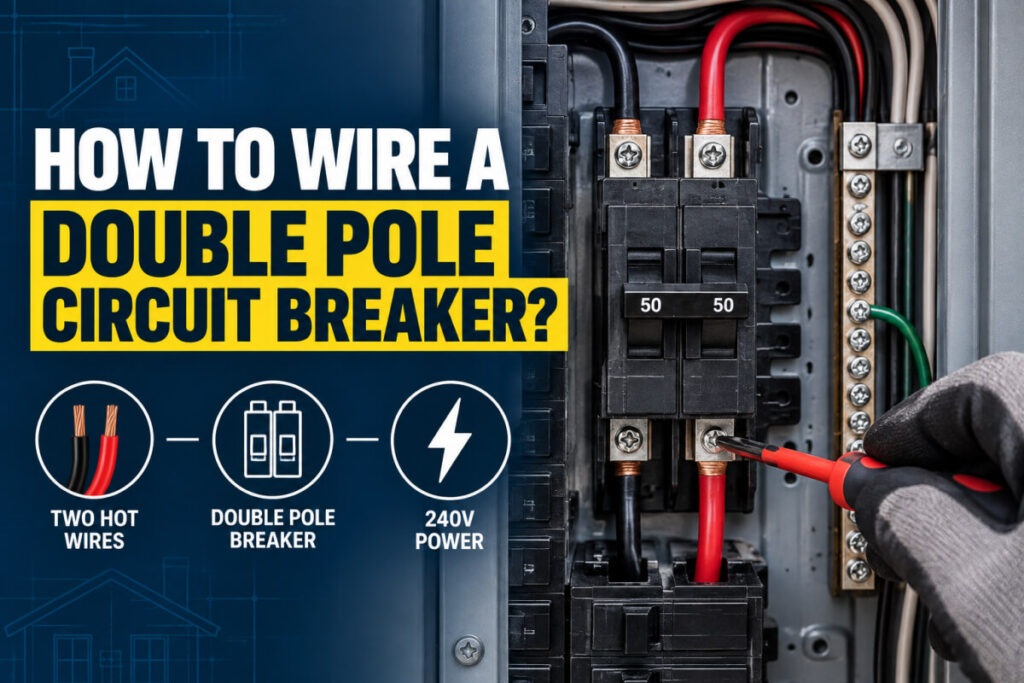
Inside the panel, a tandem breaker connects to the same busbar stab as a standard single breaker but splits that connection into two independent switches, each wired to its own circuit. This is different from a 220 circuit breaker or 220v circuit breaker, which is a double-pole unit that combines two slots into one 240V circuit — a tandem breaker keeps both circuits at standard 120V.
Is It Legal to Tie Two Breakers Together?
Tying two separate, unrelated circuits into a single non-tandem breaker is not legal or safe — a standard single-pole breaker is only listed for one circuit and one set of wires. A properly listed tandem breaker is different: it’s specifically manufactured and code-approved to run two circuits on one breaker, as long as the panel itself is also listed to accept tandem breakers in that position.
Panel Must Be Tandem-Rated
Not every slot in every panel accepts a tandem breaker. Rated slots are usually marked with a small symbol or noted in the panel’s directory label.
Two Independent Circuits Only
A tandem breaker is for two separate circuits, not for doubling the wires of a single overloaded circuit onto shared terminals.
Each Half Keeps Its Own Rating
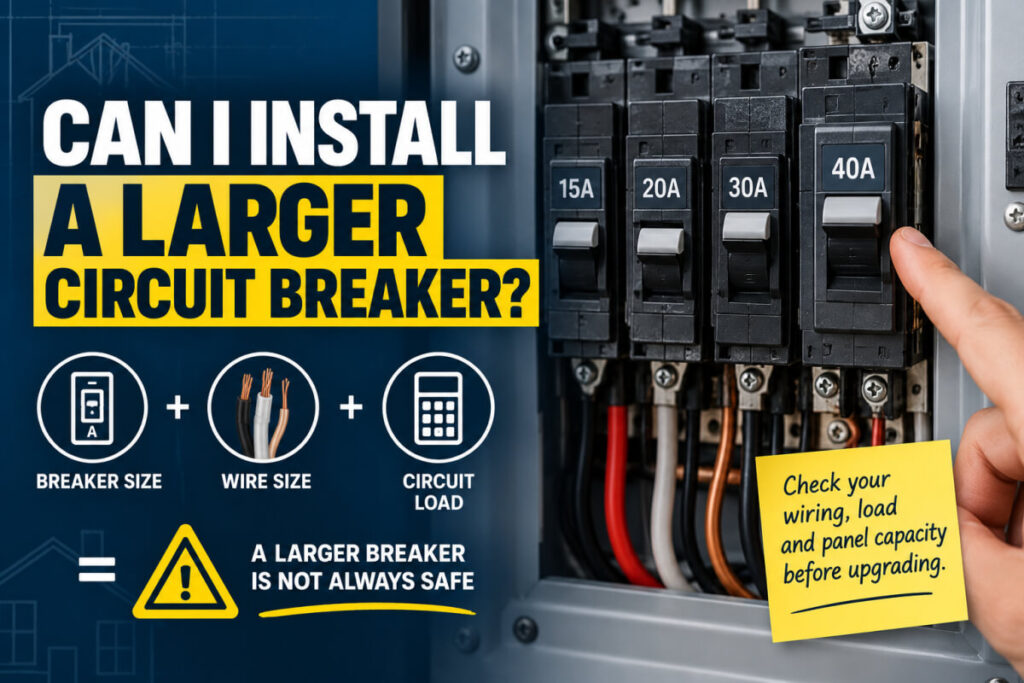
A 20 amp tandem circuit breaker still protects each half at 20 amps independently — it doesn’t split one rating across two circuits.
Tandem GFCI and AFCI Versions Exist
A tandem GFCI breaker combines ground-fault protection with the space-saving tandem design, but availability varies by panel brand.
Tandem Breakers by Panel Brand
| Brand | Common Tandem Designation |
|---|---|
| GE / ABB | THQL / THQB tandem series |
| Siemens | Q-Series and QT tandem breakers |
| Square D | Homeline tandem (not compatible with QO panels) |
Always confirm the exact model listed for your panel rather than assuming a “tandem breaker” from one brand fits another — a standard MCB (miniature circuit breaker) follows the same principle: it must match the busbar and panel listing it was designed for.
How to Add a Tandem Breaker Safely
Tools You’ll Need
- Non-Contact Voltage Tester – Confirms the panel is de-energized
- Insulated Screwdriver – Removes the panel cover safely
- Panel Manufacturer’s Documentation – Confirms which slots accept tandem breakers
- Wire Strippers – Prepares each circuit’s conductor for its terminal
Step 1: Shut off the main breaker and confirm with a voltage tester that the panel is de-energized. Step 2: Confirm the target slot is explicitly rated for a tandem breaker in your panel’s documentation. Step 3: Snap the tandem breaker onto the busbar the same way a standard breaker installs. Step 4: Land each circuit’s wire on its own separate terminal — never share a terminal between circuits. Step 5: Replace the cover, label both circuits clearly in the panel directory, and restore power.
Common Mistakes to Avoid
- Installing a tandem breaker in a slot that isn’t specifically rated for one
- Mixing tandem breakers between incompatible panel brands
- Landing two circuits’ wires on a single terminal not listed for two conductors
- Adding a tandem breaker to fix a circuit that’s already overloaded rather than genuinely adding a new one
- Skipping the panel directory label after adding a new tandem circuit
When to Call a Licensed Electrician
You should contact a professional if:
- You’re not sure whether your panel’s slots are rated for tandem breakers
- You’re adding a circuit that will run higher-draw equipment, like an air conditioner or major appliance — see our guide on AC electrical components if the new circuit is feeding a cooling system
- Your panel is already full and none of the existing slots accept tandem breakers — you may need a subpanel instead
- A newly installed breaker trips immediately or won’t seat flush — see our guide on how to change a circuit breaker safely for troubleshooting steps
- Local code requires a permit or inspection for panel modifications in your area
Frequently Asked Questions
Is It Legal to Tie Two Breakers Together?
Only with a listed tandem breaker installed in a panel slot rated to accept one. Combining two unrelated circuits onto a single standard breaker is not code-compliant or safe.
What’s the Difference Between a Tandem and a Piggyback Breaker?
These terms describe the same product — a single unit housing two independent breakers in one slot. The naming varies mainly by manufacturer and region.
Can Two Wires Go on One Breaker?
Only if that specific breaker model is listed for two conductors per terminal. Otherwise, each terminal is rated for a single wire, and doubling up risks a loose connection and overheating.
How Do I Know If My Panel Supports Tandem Breakers?
Check the panel’s interior label or manufacturer documentation. Rated slots are typically marked, and only certain panel models and positions are listed for tandem use — our guide on breaker load capacity can help you confirm the circuit’s rating once it’s installed.
Need Reliable Breakers for Your Panel?
Dvolt manufactures MCBs, MCCBs, and RCCBs engineered for consistent performance across residential and commercial panels alike.
Contact Our Team Browse Circuit BreakersFinal Thoughts
Running two circuits from one breaker is possible and code-compliant — but only through a properly listed tandem, piggyback, or duplex breaker installed in a slot your panel is rated to accept. It is never a substitute for doubling wires onto a standard breaker terminal.
Confirm your panel’s compatibility before buying a tandem breaker, match the brand exactly, and label every circuit clearly once it’s installed. If your panel doesn’t support tandem breakers or you’re unsure at any step, a licensed electrician can confirm the safest way to add capacity.