What a Circuit Breaker Upgrade Involves, When It’s Necessary, and What the Process Actually Looks Like
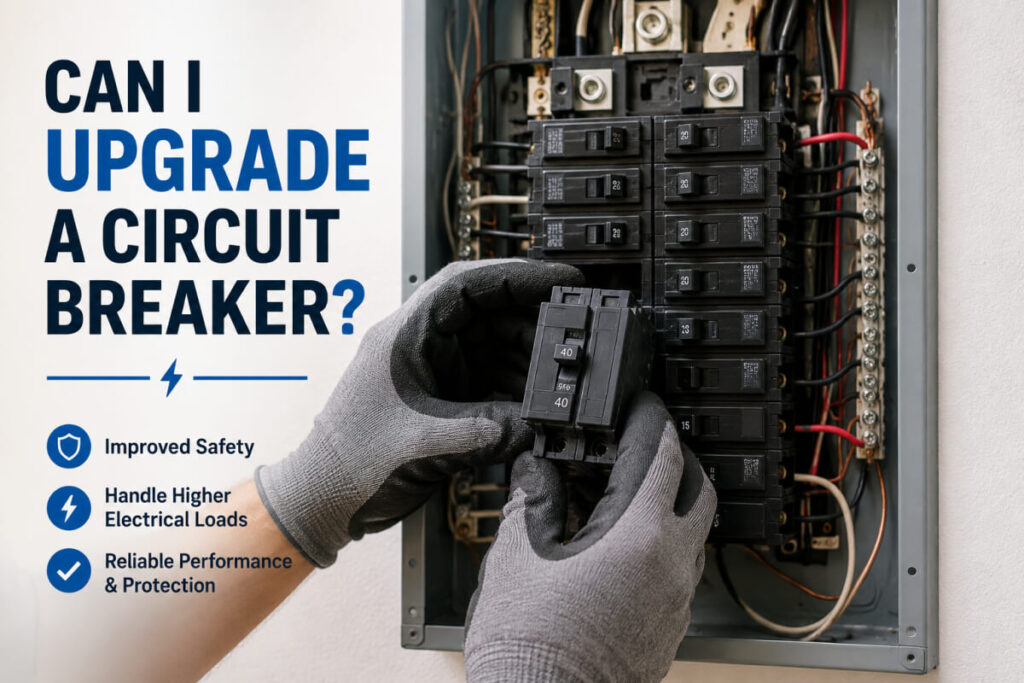
If you’re adding a new appliance, running a home EV charger, or noticing that a circuit trips too frequently for the load it carries, upgrading a circuit breaker is a logical next question. The short answer: yes, you can upgrade a circuit breaker — but what “upgrade” means in practice depends on whether you’re increasing the amperage of an individual breaker, replacing an older type with a modern AFCI or GFCI design, or upgrading the main circuit breaker feeding the entire panel.
Each scenario is a different scope of work with different requirements. This guide breaks down what a circuit breaker upgrade actually involves, when it’s the right fix, and the constraints that determine what’s possible in your existing panel.
What Does “Upgrading a Circuit Breaker” Actually Mean?
The phrase covers several distinct scenarios, each with a different answer.
Amperage Upgrade
Replacing a 15A breaker with a 20A, or a 20A with a 30A/40A, to allow a circuit to carry more current. Only safe when the wiring is already rated for the higher amperage — the wiring determines the safe limit, the breaker protects the wiring.
AFCI Breaker Upgrade
Arc-fault circuit interrupter breakers are required by code in most living areas of new and renovated homes. Replacing a standard breaker with an AFCI is a direct swap that upgrades protection type without changing amperage.
GFCI Breaker Upgrade
Ground-fault circuit interrupter breakers protect circuits in wet locations — kitchens, bathrooms, garages, outdoor circuits. Like AFCI, this is a protection-type upgrade, not an amperage change.
Main Breaker Upgrade
Upgrading from a 100A main to a 200A main is a larger project requiring a new service entrance and utility coordination. This is not a DIY project under any circumstances — always hire a licensed electrician.
When Should You Upgrade a Circuit Breaker?
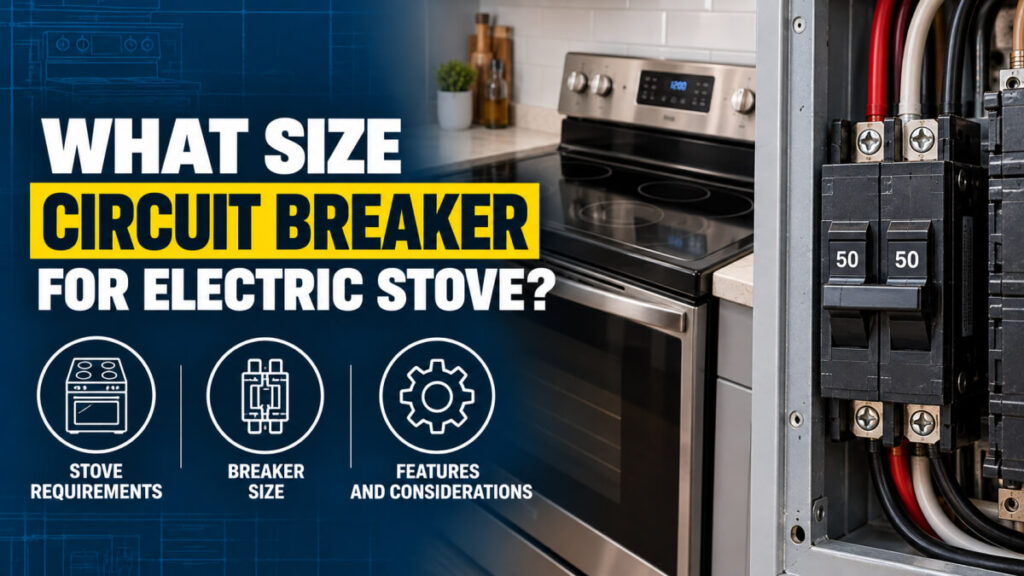
Adding a high-draw appliance: Electric vehicle chargers, electric dryers, electric ranges, heat pumps, and dedicated workshop equipment typically require 30A, 40A, or 50A circuits. If an existing circuit is undersized, the breaker and wiring behind it may both need upgrading — or an entirely new circuit may need to be run.
Replacing a breaker that trips under normal load: If a circuit breaker trips repeatedly when the load is well within its rated wattage, the breaker’s trip mechanism may have degraded internally. In this case, replacing like-for-like restores correct protection.
Code compliance during renovation: Electrical permits often require upgrading older breakers to AFCI or GFCI protection in areas being renovated. This is a protection upgrade that does not change the current limit.
Main circuit breaker upgrade for whole-home capacity: If the panel consistently trips the main breaker or you’re adding significant new loads — large HVAC equipment, a home addition, a workshop — a main panel upgrade may be necessary. This involves the utility, a permit, and a licensed electrician.
Can You Upgrade a Circuit Breaker Yourself?
Replacing an individual breaker inside an existing panel is legal for homeowners in many jurisdictions, but it carries real risk. The bus bars inside a residential panel remain live at all times — even when all individual breakers are off. Only the utility company can de-energize the service entrance.
For a standard individual breaker replacement — swapping a degraded or undersized breaker with a correctly rated new one on a circuit where the wiring already supports the new rating — a confident, experienced DIYer who understands the panel layout can do this safely. For main breaker upgrades, service entrance work, or any project involving the meter or utility connection, this is exclusively licensed-electrician territory. If you need to install a new circuit alongside the upgrade, that work should always be permitted and inspected.
Circuit Breaker Upgrade: Wire Gauge You Must Match
| Wire Gauge | Maximum Safe Breaker Rating | Common Use |
|---|---|---|
| 14 AWG | 15A | General lighting and outlet circuits |
| 12 AWG | 20A | Kitchen outlets, bathrooms, workshop general |
| 10 AWG | 30A | Dryers, water heaters, small HVAC |
| 8 AWG | 40A | Ranges, EV chargers, larger HVAC |
| 6 AWG | 50A–60A | Large ranges, hot tubs, subpanels |
How to Upgrade a Circuit Breaker — Step by Step
For a standard individual breaker upgrade where the wiring is already rated for the new amperage:
- Confirm the wire gauge on the circuit. Trace the wire from the breaker terminal and identify the gauge. The new breaker rating must not exceed the wire rating shown in the table above.
- Confirm the replacement breaker brand matches your panel. Circuit breakers are panel-specific. A Square D breaker is not interchangeable with a Siemens or Eaton breaker. Use a listed breaker for your exact panel brand.
- Turn off the main breaker to de-energize the branch breakers. Open the panel door safely — remember the service entrance bus bars remain live even with the main breaker off.
- Remove the old breaker. Pull the handle to OFF, disconnect the circuit wire from the terminal, and unclip the breaker from the bus bar following the correct removal procedure.
- Install the new breaker. Clip the new breaker onto the bus bar in the same position, reconnect the circuit wire to the terminal, and tighten the terminal screw firmly.
- Restore power and test the circuit under normal load to confirm the breaker holds correctly without tripping.
Common Circuit Breaker Upgrade Mistakes to Avoid
- Installing a higher-amperage breaker without confirming wire gauge: The most dangerous mistake — the breaker must not be rated higher than the wire it protects.
- Using the wrong breaker brand for the panel: An incompatible breaker may not seat correctly on the bus bar, creating a loose connection and fire hazard.
- Assuming a new breaker fixes an overloaded circuit: If the circuit trips because the load consistently exceeds the rating, upgrading the breaker without upgrading the wiring just moves the hazard from the breaker to the wire.
- Skipping the permit on main panel work: Main breaker upgrades require a permit and inspection. Work done without a permit creates liability and may void home insurance.
Frequently Asked Questions
Can I Upgrade a 15A Breaker to a 20A Breaker?
Only if the wiring on that circuit is 12-gauge or heavier. If the circuit uses 14-gauge wire, a 20A breaker would exceed the wire’s safe current capacity. In that case, the wire needs to be replaced along with the breaker — effectively running a new circuit.
How Much Does a Circuit Breaker Upgrade Cost?
Replacing a single breaker with an electrician typically costs $100–$300 including labor and the part. Upgrading a main panel from 100A to 200A service typically runs $1,500–$4,000 depending on whether the service entrance and meter base also need updating.
Is an AFCI Breaker Upgrade Worth It?
Yes, for living areas, bedrooms, and finished spaces. AFCI breakers detect arc faults that standard breakers miss — the kind of slow arcing from damaged wiring that causes house fires. They cost $30–$60 each and are a direct drop-in swap on most panels.
Can I Upgrade My Main Circuit Breaker Myself?
No. Main breaker replacement involves the service entrance where the bus bars are energized from the utility and cannot be turned off from inside the panel. This requires a licensed electrician, a utility disconnect, and a permit in virtually every jurisdiction.
What Is a Circuit Breaker Wiring Upgrade?
A wiring upgrade involves replacing the conductors on a circuit alongside the breaker — necessary when the existing wire gauge can’t support the higher amperage you need. This is effectively running a new circuit from the panel to the device location.
Need Upgraded Breakers for Your Panel?
Dvolt manufactures MCBs and circuit protection components built to consistent tolerances for residential and commercial electrical installations.
Contact Our Team Browse Our MCBsFinal Thoughts
You can upgrade a circuit breaker — but the upgrade is only as safe as the wiring behind it. Increasing a breaker’s amperage without also upgrading the wire gauge removes protection rather than adding capacity. An AFCI or GFCI upgrade is straightforward and improves protection without changing the current limit. And a main circuit breaker upgrade is always a job for a licensed professional with the right permit.
Know your wire gauge, match your breaker brand to your panel, and get the right permit for any main service work. Those three rules cover most of what can go wrong in a circuit breaker upgrade.