AC Contactor Not Engaging — Causes, Diagnosis, and What to Check First
When your air conditioner tries to start but nothing happens outside — the condenser fan doesn’t spin, the compressor doesn’t kick on — and you can hear a buzzing or humming from the condenser unit, an AC contactor not pulling in is one of the most likely causes. An AC contactor not pulling in means the electromagnetic coil isn’t closing the contacts, so 240V never reaches the compressor or fan motor regardless of what the thermostat is doing.
This guide covers exactly why an AC contactor fails to pull in, how to diagnose whether the problem is the contactor itself or the 24V control circuit feeding it, and what to check before replacing anything.
How an AC Contactor Works (and Why It Stops Pulling In)
An AC contactor is an electrically operated switch. The thermostat sends a 24V signal to the contactor coil when it calls for cooling. That 24V energizes the coil, creating a magnetic field that pulls the armature down and closes the contact points — connecting 240V line power to the compressor and condenser fan. When the coil loses the 24V signal or fails internally, the contacts stay open and the system won’t start.
The contactor “pulling in” refers specifically to this magnetic engagement. Understanding how the coil terminals and contact circuit are wired helps make the diagnostic steps below much clearer — the coil circuit and the high-voltage load circuit are completely separate, and the fault is almost always in one or the other.
Common Reasons an AC Contactor Is Not Pulling In
No 24V at the Coil
The most common cause — and it means the contactor itself may be perfectly fine. Causes include a blown low-voltage fuse on the control board, a failed thermostat, a faulty control board, or a break in the low-voltage wiring run between the air handler and condenser.
Burned or Failed Coil
If 24V is present at the coil terminals but the contactor still won’t pull in, the coil itself has failed. A healthy coil reads 10–40 ohms on a multimeter. An open (infinite resistance) reading confirms the coil is dead.
Stuck or Seized Armature
The moving armature can become stuck from corrosion, insect debris (fire ants are notorious in warm climates), or physical damage. If the coil energizes but contacts don’t close, the armature is obstructed.
Pitted or Welded Contacts
Heavily worn contacts from years of arcing can fail to make contact when the contactor pulls in, or in the opposite failure mode, weld shut and refuse to open at all.
Low Voltage to the Coil
The coil needs minimum voltage to generate sufficient magnetic force. If the 24V supply is delivering 18V or below, the contactor may buzz without fully pulling in. Measure the actual voltage — don’t assume it’s present because other low-voltage components appear to work.
3-Phase Contactor Won’t Pull In
On commercial or three-phase systems, the same diagnostic logic applies — confirm control voltage at the coil terminals first. Three-phase contactors use the same coil/armature mechanism; low control voltage and open coil resistance are the most common failure modes.
How to Diagnose a Contactor Not Pulling In — Step by Step
- Confirm the thermostat is actively calling for cooling. Set the thermostat to COOL and reduce the setpoint several degrees below the current room temperature. The 24V signal is only present at the contactor coil when the thermostat is actively calling — testing without a cooling call gives a meaningless result.
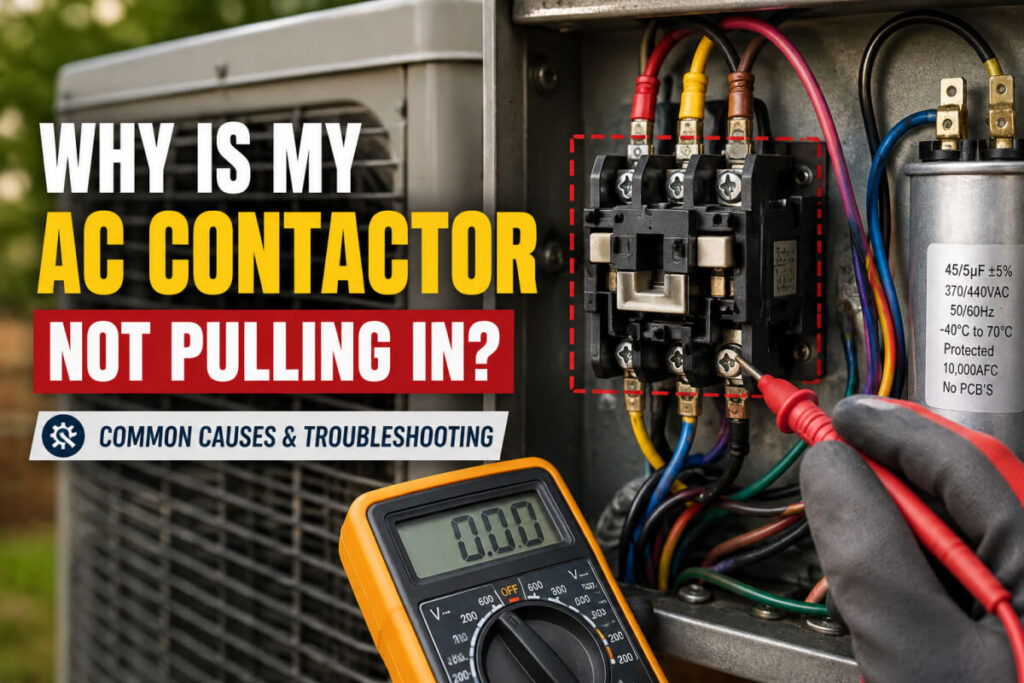
- Measure voltage at the contactor coil terminals (A1 and A2). With the thermostat calling for cooling, use a multimeter set to AC voltage and measure across the two coil terminals. You should read 24V AC (22–26V is acceptable). This is the single most important test.Reading 24V → contactor fault The coil or armature has failed. Replace the contactor.Reading 0V → control circuit fault Problem is in the thermostat, control board, low-voltage fuse, or wiring. Replacing the contactor won’t fix it.
- Check coil resistance with the disconnect off. Set the multimeter to ohms and measure across the coil terminals on the isolated contactor. Healthy coil: 10–40 ohms. Open reading (OL/infinite): coil is burned out and confirmed failed.
- Inspect the contactor physically. Look for ant or insect debris in the contact cavity, burn marks on the contact points, or discoloration of the coil housing. Any of these confirms the contactor needs replacement regardless of the resistance reading.
- Manually press the contactor armature (with the disconnect closed and thermostat calling for cooling — carefully and briefly). If the system starts with manual engagement but not on its own, the coil or control signal is the problem. If it doesn’t start even with manual pressing, the fault is in the high-voltage circuit — compressor, capacitor, or fan motor.
Contactor Has Voltage But Not Pulling In
If the voltage test confirms 24V is present at the coil terminals but the contactor still won’t pull in, the coil has failed internally. Confirm with the resistance test — an open reading means the coil is the fault. Once voltage is confirmed and the coil is confirmed open, this is a clear-cut contactor replacement. The cost to replace an AC contactor is typically $15–$40 for the part on a standard residential unit, making it one of the more affordable HVAC repairs.
Contactor Pulled In But Nothing Happens
If the contactor is pulling in — armature engaged, audible click — but the compressor or fan still doesn’t run, the fault is not the contactor. The contactor is doing its job correctly; the problem is downstream. Check the run capacitor first — a failed run capacitor is the most common reason a compressor hums but won’t start. Then check the compressor and condenser fan motor.
Heat Pump Contactor Not Pulling In
Heat pump contactors follow the same diagnostic process. The key difference is that heat pumps operate year-round and use a slightly different low-voltage control arrangement. Confirm the thermostat is calling for the correct mode (heat or cool), and that the low-voltage wiring from the air handler to the outdoor unit is intact — heat pump wiring carries more conductors than a standard cooling-only system and has more potential break points.
When to Replace vs. When to Diagnose Further
Replace the contactor if:
- The coil reads open (infinite ohms) on a multimeter with power off
- 24V is confirmed at the coil terminals but the contactor still won’t engage
- Visible burn marks, pitted contacts, or insect debris in the contact cavity
- The contactor is more than 10 years old and showing any signs of wear
Do not replace the contactor if:
- The coil voltage test reads 0V — fix the control circuit fault first; the contactor may be perfectly fine
- The contactor pulls in but nothing happens — the fault is downstream (capacitor, compressor, or fan motor)
Frequently Asked Questions
Why Is My AC Contactor Not Pulling In?
The most common causes are no 24V reaching the coil (control circuit fault), a burned contactor coil, or physical obstruction of the armature. Measure voltage across the coil terminals first with the thermostat calling for cooling — this one test separates a contactor problem from a control circuit problem.
What Does It Mean If I’m Not Getting 24 Volts to the Contactor?
The problem is in the thermostat, control board, low-voltage fuse, or low-voltage wiring — not the contactor itself. Replacing the contactor will not restore function until the 24V supply is restored to the coil terminals.
Why Does My Contactor Work When Pushed In?
Manual engagement closes the contacts mechanically, bypassing the electromagnetic coil entirely. If the system runs when manually pressed but not on its own, the coil has failed or the 24V control signal isn’t reaching it — the high-voltage circuit and compressor are functional.
How Do I Test My AC Contactor?
Measure voltage at the coil terminals (A1 and A2) with the thermostat calling for cooling — should read ~24V AC. Then measure coil resistance with power off — should read 10–40 ohms. Zero voltage means a control circuit fault; open coil resistance means the coil has failed.
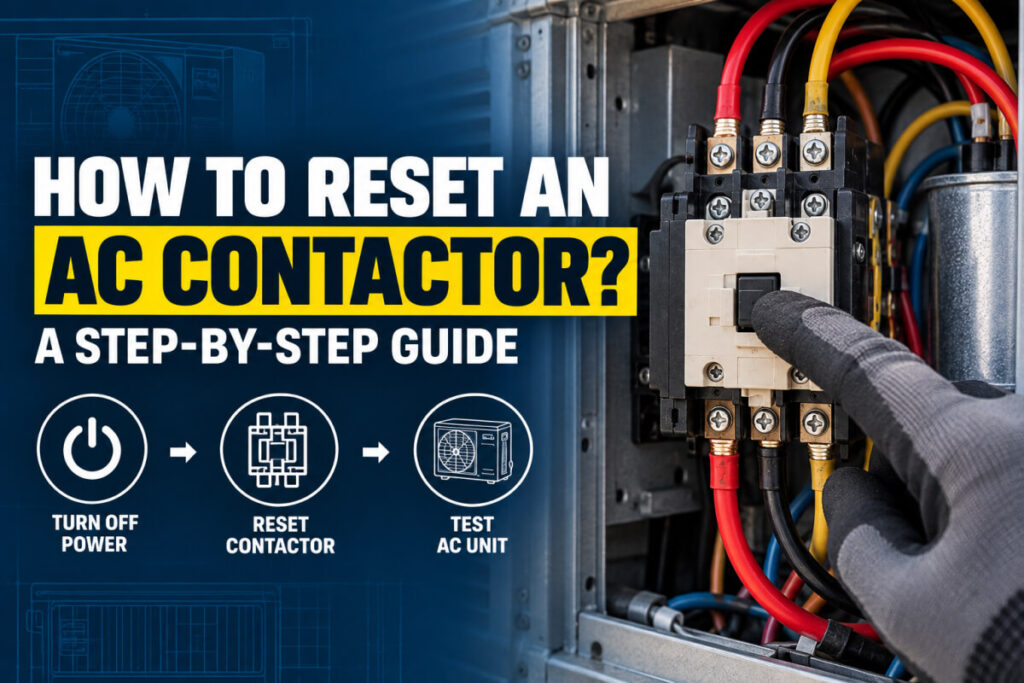
How Do I Reset an AC Contactor?
AC contactors don’t have a user-accessible reset. If the contactor isn’t pulling in, the coil must receive a 24V signal to engage — there’s no manual reset mechanism separate from the thermostat call. If the system tripped a circuit breaker at the panel, resetting that breaker restores the 240V supply, but the contactor itself still needs the 24V control signal from the thermostat to pull in.
Need a Quality Replacement Contactor?
Dvolt manufactures contactors and switching components built to consistent tolerances for residential and commercial HVAC and electrical applications.
Contact Our Team Browse Our ProductsFinal Thoughts
An AC contactor not pulling in has two possible root causes: the 24V control signal isn’t reaching the coil, or the coil itself has failed. Measuring voltage at the coil terminals with the system calling for cooling is the single most useful diagnostic step — it tells you within seconds whether the problem is in the control circuit or the contactor, so you’re replacing the right component.
If 24V is present and the coil reads open, replace the contactor. If 24V is absent, trace the control circuit — the thermostat, low-voltage fuse, and control board wiring — before touching the contactor at all.