Doorbell Transformers, Voltage, Wiring, and Which Breaker Actually Controls Your Doorbell
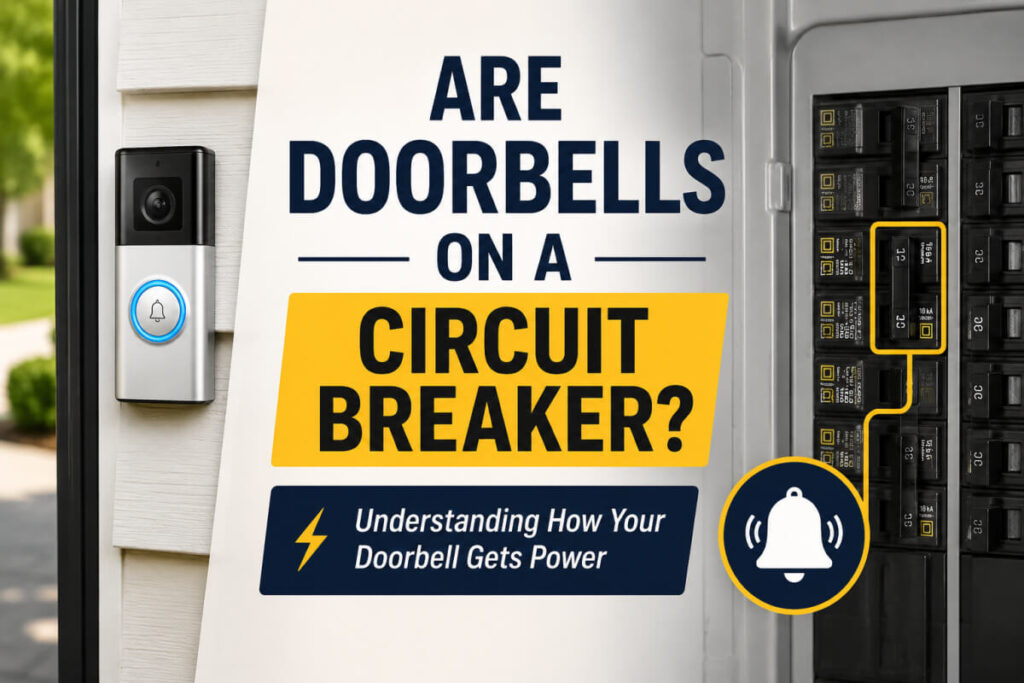
Are doorbells on a circuit breaker? Technically, yes — but not in the way most people expect. The doorbell chime and push button run on low-voltage wiring, while a small transformer bridges that low-voltage doorbell circuit to your home’s standard 120V wiring, and that transformer is what’s actually connected to a breaker in your panel.
This distinction is exactly why homeowners struggle to figure out which breaker turns off power to a doorbell — most panels don’t label a “doorbell” circuit at all, since the transformer is usually tied into a nearby outlet, light, or general-purpose circuit instead of getting its own dedicated breaker.
This guide explains how a full doorbell circuit works from the breaker panel down to the chime, what voltage a doorbell actually runs on, how a doorbell transformer functions, and how to wire or replace one safely.
Are Doorbells on a Circuit Breaker?
A doorbell system actually spans two separate circuits. The low-voltage side — the push button, bell wire, and chime — isn’t connected to a breaker at all, because it never carries standard household voltage. The doorbell transformer, however, is wired directly into your home’s 120V system, and that transformer absolutely sits on a circuit breaker like any other fixture — often the same MCB protecting a nearby light or outlet.
Which Breaker Turns Off Power to a Doorbell?
There’s rarely a breaker specifically labeled “doorbell.” Most doorbell transformers are spliced into an existing lighting or outlet circuit near where the transformer is mounted — often in a hallway closet, basement, or garage. To find it, look for the transformer itself, trace the two thicker wires running to it, and test each candidate breaker with a voltage tester at the transformer until the power drops, the same trial-and-error most people go through when a breaker won’t stay reset and they’re hunting for the actual circuit at fault.
Are Doorbells Low Voltage? What Voltage Are Doorbells?
Yes, doorbells are low voltage on the chime side. Standard doorbell voltage typically falls between 8V and 24V AC, with 16V being the most common rating for residential chimes. That low voltage is exactly why a doorbell circuit feels harmless to the touch compared to the 120V wiring that feeds its transformer.
How a Doorbell Circuit Works
The Transformer
Steps 120V household power down to a safe low voltage, typically 16V, and is the only part of the system connected to a breaker.
The Push Button
Acts as a simple switch on the low-voltage side, completing the circuit only when pressed.
The Chime Unit
Receives the low-voltage signal from the button and triggers the mechanical or digital sound.
The Bell Wire
Thin, low-voltage wire connecting the button, transformer, and chime — distinct from standard household wiring gauge.
A basic doorbell circuit diagram shows the transformer’s two low-voltage leads running to the chime unit, with the push button wired in series between one of those leads and the chime. Pressing the button closes that loop, and the chime sounds until the button is released.
How Does a Doorbell Transformer Work?
A doorbell transformer uses two coils of wire wound around a shared magnetic core, not unlike the coil that pulls the contacts closed inside an AC contactor. Household 120V power flows through the primary coil, inducing a much lower voltage in the secondary coil based on the ratio of windings between the two — that reduced voltage is what powers the chime side safely.
Doorbell Transformer Types: Plug-In vs. Hardwired
A plug-in doorbell transformer connects directly to a standard outlet, making it the simplest option for a doorbell kit with transformer included, since no electrical box work is required. A hardwired transformer instead gets installed inside a junction box tied into an existing circuit, which is the more common setup in older homes and typically offers a more permanent, code-compliant connection.
How to Install or Wire a Doorbell Transformer
Tools You’ll Need
- Non-Contact Voltage Tester – Confirms the circuit is de-energized before wiring
- Wire Strippers – Prepares both the 120V leads and the low-voltage bell wire
- Screwdriver – Secures the transformer bracket and terminal screws
- Replacement Transformer Matching Your Chime’s Voltage – Usually 16V for standard residential chimes
Step 1: Turn off the breaker feeding the transformer’s location and confirm with a voltage tester.
Step 2: Mount the new transformer in the junction box or, for a plug-in unit, simply install it at an outlet.
Step 3: Connect the two 120V leads to the circuit wiring, matching hot to hot and neutral to neutral, the same polarity rule that applies any time you’re landing wires on a new outlet or breaker.
Step 4: Connect the low-voltage bell wire to the transformer’s secondary terminals.
Step 5: Restore power and press the doorbell button to confirm the chime sounds.
Common Mistakes to Avoid
- Installing a transformer with the wrong voltage rating for the chime unit
- Assuming the low-voltage bell wire needs the same breaker protection as standard household wiring
- Wiring the 120V side without confirming the circuit is de-energized first
- Forgetting to label the breaker once you’ve identified which one feeds the doorbell transformer, the kind of small detail that makes future panel work much faster
- Mounting a hardwired transformer without securing it inside a proper junction box
When to Call a Licensed Electrician
You should contact a professional if:
- You can’t identify which breaker feeds the doorbell transformer after checking the likely candidates
- The transformer shows signs of overheating, burning, or physical damage
- You’re replacing a hardwired transformer rather than a simple plug-in unit
- The doorbell circuit is tied into wiring that looks outdated or damaged
- A new chime or transformer still doesn’t work after confirming correct voltage and wiring
Frequently Asked Questions
Are Doorbells on a Circuit Breaker?
The transformer is, since it’s wired into standard 120V household circuitry. The chime and push button themselves run on low voltage and aren’t directly protected by a breaker.
Which Breaker Turns Off Power to a Doorbell?
There’s usually no dedicated “doorbell” breaker — the transformer typically shares a circuit with a nearby light or outlet. Trace the transformer’s location and test candidate breakers with a voltage tester to confirm.
Are Doorbells Low Voltage?
Yes, on the chime side. Doorbell transformers typically step household power down to 8V–24V, with 16V being the most common standard for residential systems.
How Do I Hook Up a Doorbell Transformer?
De-energize the feeding breaker, wire the transformer’s primary side to the 120V circuit, connect the secondary side to the bell wire running to the chime and push button, then restore power and test.
Need Reliable Circuit Protection for Home Wiring Projects?
Dvolt manufactures MCBs and RCCBs built for consistent, reliable protection across everything from lighting circuits to low-power fixtures like doorbell transformers.
Contact Our Team Browse Circuit BreakersFinal Thoughts
A doorbell is really two circuits working together: a low-voltage loop that’s harmless to the touch, and a standard 120V connection feeding the transformer that makes the whole system possible. Once you know the transformer is the part actually tied to your panel, tracking down the right breaker and troubleshooting a dead doorbell both become far more straightforward.
If you’re ever unsure which wires carry line voltage versus low voltage, treat every wire at the transformer as energized until you’ve confirmed otherwise with a tester — and don’t hesitate to bring in a licensed electrician for anything beyond a simple transformer swap.