A Homeowner’s Guide to Safely Opening an Indoor or Outdoor Breaker Box
Learning how to open a breaker box sounds simple until you’re standing in front of one with a stuck cover, hidden screws, or a stiff outdoor latch that won’t budge. Whether you’re resetting a tripped breaker, checking a fuse, or just trying to see what’s inside a breaker box for the first time, the process is straightforward once you know what you’re actually looking at.
Most people only need to open a breaker box occasionally, so it’s easy to forget how the cover is secured or what’s safe to touch once it’s off. This guide walks through how to open a circuit breaker box step by step, what’s normal to see inside, how an outdoor panel differs from an indoor one, and when opening the cover is fine for a homeowner versus when it’s time to call an electrician.
A Breaker Box Has Two Separate Covers
Before touching anything, it helps to understand that a breaker box isn’t a single cover — it’s two. The outer door swings open on a hinge and gives access to the breaker switches themselves, which is all most homeowners ever need. Underneath those breakers sits a second panel, called the dead-front cover, which is screwed on separately and shields the energized busbar and wiring behind it.
How to Open a Circuit Breaker Box, Step by Step
What You’ll Need
- Flashlight – Panels are often in dim basements, closets, or garages
- Screwdriver – Some panel doors use a screw or latch instead of a simple hinge
- Dry Hands and Dry Surroundings – Never touch a panel with wet hands or in a damp area
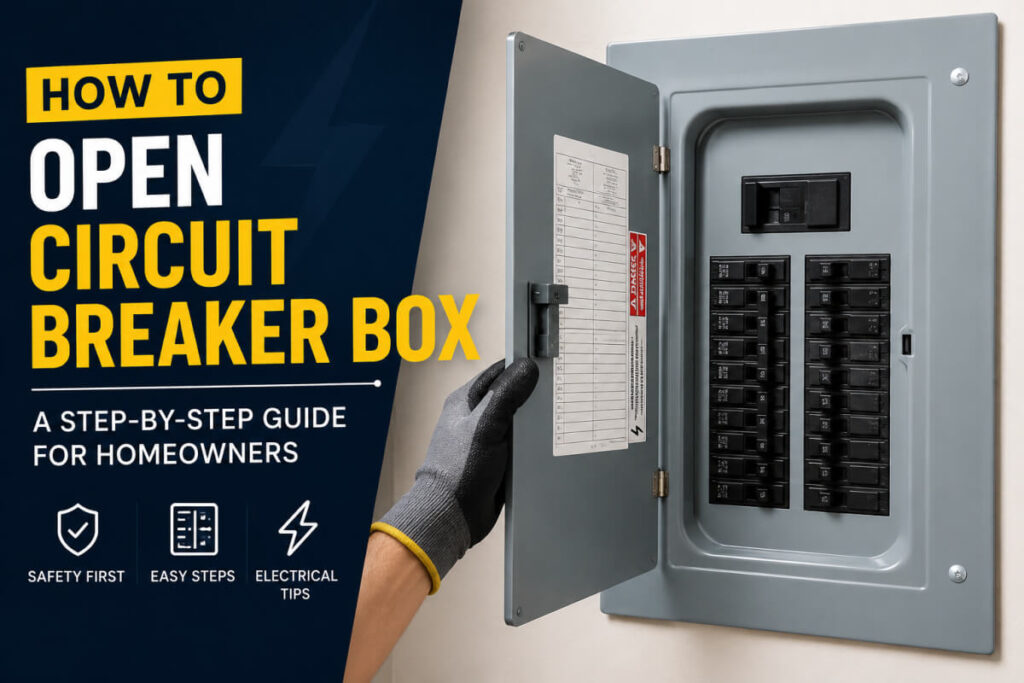
- Step 1: Locate the panel door — usually a metal rectangle mounted flush to the wall, sometimes painted to match.
- Step 2: Check for a latch, handle, or small screw holding the door shut; most residential panels use a simple magnetic or spring latch that opens with a light pull.
- Step 3: Swing the door open fully so you can see the row of breaker switches clearly.
- Step 4: Stop there for routine tasks like resetting a tripped breaker — you should never need to go further than this for everyday use.
What’s Inside a Breaker Box?
The Main Breaker
Usually the largest switch, often at the top or side, controlling power to the entire panel at once.
Individual Circuit Breakers
Smaller switches, often standard MCBs, each protecting one circuit in the home — lights, outlets, appliances, and so on.
The Panel Directory
A printed or handwritten label, usually on the inside of the door, listing which breaker controls which room or circuit.
The Dead-Front Cover
The metal panel behind the breakers that should stay closed and screwed in place at all times.
Opening an Outdoor Breaker Box
An outdoor panel works the same way as an indoor one, just with weatherproofing added. Most outdoor covers use a latch or a small padlock hasp rather than a simple hinge pull, since the enclosure needs to stay sealed against rain and moisture. If the latch feels stuck, it’s often just corrosion or paint buildup around the seal rather than a locked mechanism — a little pressure on the latch itself, not the door, usually frees it up.
Why Outdoor Panels Sometimes Feel Harder to Open
Weather exposure causes outdoor breaker box doors to swell, rust, or stick more than indoor panels do. If the door won’t budge after checking the latch, don’t force it with a screwdriver or pry bar — a stuck outdoor panel is a reasonable time to bring in a professional rather than risk damaging the enclosure’s weatherproof seal.
How to Use a Breaker Box Once It’s Open
Learning how to use a breaker box safely comes down to understanding what each switch does before you touch it. Check the panel directory first to identify which breaker controls the circuit you’re working on, and always assume a labeled breaker could be wrong if the panel is old or was recently modified — testing with a voltage tester at the outlet or fixture is the only way to be certain a circuit is truly off, the same confirmation step worth taking before you ever work on a doorbell transformer or any other fixture tied into the panel.
Common Mistakes to Avoid
- Removing the dead-front cover to reset a breaker instead of just opening the outer door
- Forcing a stuck outdoor latch with tools instead of clearing corrosion or paint buildup first
- Working on a panel with wet hands or in a damp environment
- Assuming the panel directory labels are accurate without verifying with a voltage tester
- Leaving the panel door open or unlatched after finishing, which can allow dust, insects, or moisture inside
When to Call a Licensed Electrician
You should contact a professional if:
- The dead-front cover needs to come off for any reason beyond a routine breaker reset
- An outdoor panel door is rusted, swollen, or won’t open even after checking the latch
- You see scorch marks, melted plastic, or smell burning near the panel
- The panel directory is missing, outdated, or clearly doesn’t match the home’s actual wiring, much like tracking down which breaker feeds a component such as an AC contactor that isn’t clearly labeled
- You’re not confident identifying which switch is the main breaker versus an individual circuit
Frequently Asked Questions
How Do I Open a Breaker Box?
Locate the metal door mounted on the panel, check for a latch or small screw, and swing it open. Most residential panels use a simple magnetic or spring latch that requires no tools.
How Do I Open an Outside Breaker Box?
The process is the same as indoors, but outdoor panels often have a weatherproof latch that can stick from corrosion or paint. Apply gentle pressure to the latch itself rather than forcing the door.
What’s Inside a Breaker Box?
A main breaker, individual circuit breakers for each area of the home, a panel directory listing what each breaker controls, and a dead-front cover shielding the energized wiring behind the switches.
Is It Safe to Open a Breaker Box Myself?
Opening the outer door to view or reset breakers is safe for most homeowners. Removing the dead-front cover behind the breakers exposes energized components and should be left to a licensed electrician, the same caution you’d apply before working on any new wiring or outlet installation.
Need Reliable Components for Your Panel?
Dvolt manufactures MCBs, RCCBs, and switch disconnectors engineered for consistent, dependable performance in both indoor and outdoor residential panels.
Contact Our Team Browse Circuit BreakersFinal Thoughts
Opening a breaker box is a simple task once you know there are really two covers to think about: the outer door, which is fine for routine breaker access, and the dead-front cover underneath, which should stay closed. Indoor and outdoor panels work the same way at heart, with weatherproofing being the main difference on an outdoor enclosure.
If a cover won’t open, feels stuck for reasons beyond normal wear, or you find yourself needing to look past the breakers themselves, that’s the moment to stop and bring in a licensed electrician rather than push further on your own — much like knowing when a project has moved from a quick breaker reset into something that needs a professional’s attention.